Skip to content
Vehicle interior-car-interior

Fogging

Determination of the fogging behavior of materials used in vehicle interiors

FOGGING TEST IN THE
AUTOMOBILE INTERIOR

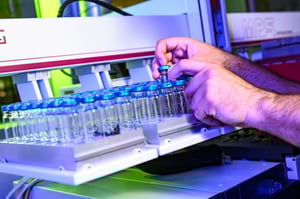
The fogging test is an essential test for materials used in vehicle interiors. It ensures that your components do not release unwanted volatile substances that could deposit on windows or other surfaces. The fogging test is an essential test for determining the outgassing of volatile organic compounds (VOCs) from materials in the vehicle interior. It ensures that emissions, which can appear as fog or mist on cold surfaces such as windscreens, are minimized to ensure driver visibility and safety. These deposits can not only impair visibility, but also reduce the perceived quality and comfort in the vehicle.
Elektrische Prüfung Innenraum LED Car Interior Beleuchtung lang

Shaker-, vibration- and mechanical shock testing

 For Reliable Component Validation 

Flexible Accredited

SHAKER TESTING FOR RELIABLE COMPONENT VALIDATION

Components and systems in vehicles are exposed to a wide range of mechanical loads throughout their entire lifecycle – from continuous vibrations during vehicle operation to sudden shock loads caused by handling, transport or extreme operating conditions. With our shaker testing services, we support you in evaluating the durability, robustness and functional reliability of your components under realistic conditions.

imat offers a broad range of vibration and shock testing services – individually tailored to the component, operating environment, specification and customer-specific requirements. Thanks to our flexible accreditation, a wide variety of test requirements can be requested and individually assessed within the accredited scope.

Our Testing Services

We perform different types of vibration testing, including sinusoidal vibration, random vibration and combined sine-on-random profiles. This allows us to simulate both defined frequency excitations and realistic broadband load scenarios.

In addition, we offer mechanical shock testing to evaluate short-term, highly dynamic loads. These tests help identify potential weaknesses at an early stage and support the targeted validation of component robustness.

Thanks to our flexible accreditation, we are able to efficiently assess various test requirements on a project-specific basis. Please feel free to contact us with individual or customer-specific test profiles.

Customized Test Profiles and Fixtures

Each component has its own specific requirements in terms of test setup, mounting and load profile. For this reason, we develop customized test profiles where required, based on real operating conditions, standards or OEM specifications.

A key part of our service is the design and build of customized test fixtures. Our fixtures are engineered to enable reproducible, safe and meaningful testing. Upon request, we also perform fixture validation to ensure that the test setup accurately transfers the intended loads.

Test methods

 We conduct your required testing under accreditation and in accordance with the applicable test specifications to ensure the highest OEM standards:

    • VDA 270
    • PV 3900
    • ISO 12219-7
    • BMW GS 95024‑3‑1
    • DIN 75201-B (gravimetric)
    • PV 3015 (Volkswagen)
    • DIN EN ISO 527-2
    • DIN EN ISO 178
    • DIN EN ISO 179-1
    • DIN 53435
    • DIN ISO 7619-1
    • DIN EN ISO 11664-4 (CIE 1976)
    • VW 50190 (Color)
    • and many more.
Elektrische Prüfung Innenraum LED Car Interior Beleuchtung lang
imat_Shaker_Testing_Motiv_2_Slider_1100x620px_260625_V3_a

Selina_Rudat_quer_mit_Logo_01

Fogging test methods

  • DIN 75201-A (reflectrometric)
  • DIN 75201-B (gravimetric)
  • PV 3015 (Volkswagen)
  • GMW 3235-A (General Motors Worldwide)
  • PSA D45 1727
  • and much more.
Search Suggestions
Frequently requested tests

CONTACT OUR EXPERTS

Description. Lorem ipsum dolor sit amet, consetetur sadipscing elitr, sed diam nonumy eirmod tempor invidunt ut labore et

  • Tab Title
Marco-Theunissen_600x800px_240320
NAME Job Title
Christoph_Bücken_600x800px
NAME Job Title
Ronald_Althoff_cross_2_1
NAME Job Title
saglamme_quer_07_600x800px_240320
NAME Job Title
Simon_Zander_cross_2_1
NAME Job Title
Nicole_Nienhaus_600x800px
NAME Job Title
  • 01 Purpose of the shaker test
  • 02 Typical Services

Purpose of the shaker test

  • Identify weaknesses early
  • Prevent failures during use
  • Demonstrate product reliability
  • Optimize design and construction
  • Reduce complaints and costs
  • Simulate transport and operating loads
  • Meet standards and customer requirements
  • Increase safety and service life

Typical Services at a Glance

  • Sinusoidal vibration testing 
  • Random vibration testing 
  • Sine-on-random vibration testing 
  • Mechanical shock testing 
  • Development of customized test profiles 
  • Design and build of customized test fixtures 
  • Fixture validation 
  • Testing according to customer-specific specifications and requirements 
  • Flexible accredited testing of various requirements within the scope of our accreditation 

Talk to Us About Your Testing Requirements

Whether you need standard testing, a customer-specific load profile or a complex test setup: we support you from test planning and fixture design through to execution and evaluation of the shaker test. Thanks to our flexible accreditation, you are welcome to request individual test requirements – together, we will assess how they can be implemented in a standards-compliant and project-specific way.


NORM CONFORM. CLEAR. RELIABLE.
TESTS ACCORDING TO GLOBAL STANDARDS.

Our validation follows the standards that stand for safety, quality and reliability worldwide.

DIN, ISO, VDA and OEM specifications determine our testing processes - transparently documented and consistently compliant with standards.
Because the highest standards are the basis for lasting results.

ARE YOU LOOKING FOR A TEST STANDARD? DELIVERY SPECIFICATION? METHOD?

FAQ

Frequently asked questions about the fogging test

What is the fogging test? The fogging test measures the release of volatile substances from materials that can form deposits on surfaces such as windows.
How long does a fogging test take? As a rule, you will receive the results within a few days, depending on the complexity of the materials.
What do I do if the exam is negative? We offer you comprehensive advice and recommendations to take appropriate measures and find alternative materials.
What sample quantities are required for a fogging test?

The sample quantities required for a fogging test depend on the standard and the test method used. Here are the general guidelines:

1. standard DIN 75201 (type A and type B)

  • Type A (glass plate method):
    A sample quantity of 10 cm² is typically required. The sample is placed on a heated plate in a sealed chamber and the volatiles released condense on a glass plate above.

  • Type B (aluminum foil method):
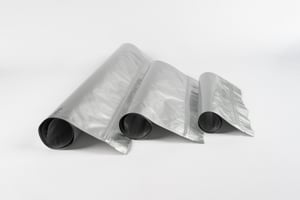
    Similar to type A, a sample volume of approximately 10 cm² is used. However, the volatile substances condense on a cooled aluminum foil.

2. standard ISO 6452 (international standard)

  • Sample quantity:
    Again, a sample size of about 10 cm² is typically required to evaluate the amount of volatiles released at elevated temperature.

3. other specific requirements

Depending on the specific requirements of the customer or OEM standards, sample quantities may vary. It is important to check the respective standards or test requirements carefully.

What is the difference between the reflectometric and gravimetric test method according to DIN 75201?

Method A - Reflectometric method:

  • Principle: This method measures the change in reflectivity on a glass plate on which volatile components from the material sample are deposited.
  • Procedure: A material sample is heated in a beaker while a glass plate above it is cooled to 21°C. The temperature difference causes the volatile components to condense on the glass plate. The reflectance index of the fogged glass plate is then measured to determine the amount of condensed material.
  • Application: This method is particularly suitable for materials for which an exact determination of the optical fog effect is required.

Method B - Gravimetric method:

  • Principle: This method measures the weight of condensed volatiles on an aluminum foil.
  • Procedure: The material sample is heated in a beaker while an aluminum foil disc is cooled to 21°C. After 16 hours, the amount of condensed material on the foil is weighed.
  • Application: This method is ideal for an accurate quantitative determination of the amount of condensed volatiles.
Do you have further questions?

CONTACT US

FAQ

FREQUENTLY ASKED QUESTIONS ABOUT THE SHAKER TEST

What is meant by shaker testing?  Shaker testing is a test method in which components, products, or assemblies are exposed to controlled vibrations in order to test their durability, stability, and service life. 
Why is shaker testing performed?  It is performed to ensure that a product can withstand vibrations during transport, operation, or use without being damaged or losing its functionality. 
What types of vibration tests are used in shaker testing?

Common test types include sine tests, random vibration tests, and shock tests. Depending on the application, different frequencies, acceleration levels, and test durations are used. 

Do you have any further questions? Our experts will be happy to answer your questions about various laboratory tests. Please feel free to contact us here. We look forward to processing your inquiry and helping you further.