
Skip to content
Vehicle interior-car-interior

Fogging

Determination of the fogging behavior of materials used in vehicle interiors

FOGGING TEST IN THE
AUTOMOBILE INTERIOR

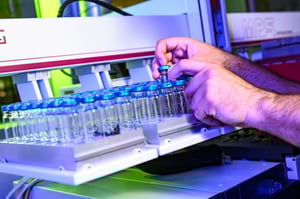
The fogging test is an essential test for materials used in vehicle interiors. It ensures that your components do not release unwanted volatile substances that could deposit on windows or other surfaces. The fogging test is an essential test for determining the outgassing of volatile organic compounds (VOCs) from materials in the vehicle interior. It ensures that emissions, which can appear as fog or mist on cold surfaces such as windscreens, are minimized to ensure driver visibility and safety. These deposits can not only impair visibility, but also reduce the perceived quality and comfort in the vehicle.
imat_Accredited_Airbag_Tests_1100x620px_260625

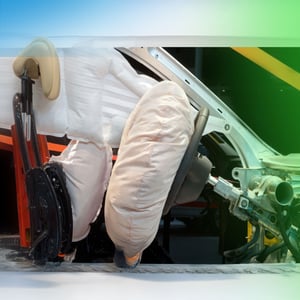
Airbag Deployment & Passive Safety Testing

For Safe Vehicle Interiors

Accredited Airbag Tests

AIRBAG & PASSIVE SAFETY TESTING FOR AUTOMOTIVE COMPONENTS

Airbags are among the key safety systems in a vehicle. To ensure that they function reliably in an emergency, airbag systems and adjacent interior components must be tested, analyzed and validated under realistic conditions.

As a specialized testing company for automotive interiors, imat supports OEMs and suppliers in the development, verification and release of airbag-related components, systems and interior concepts. Our focus is on reproducible test conditions, precise high-speed analysis, technical documentation and engineering support in the evaluation of abnormalities or failure patterns.

Your Advantage with imat

With airbag testing capabilities in North America, imat offers powerful support for international automotive projects. Customers benefit from local proximity, realistic test conditions, high-speed analysis and engineering expertise in the field of vehicle interiors.

Our airbag tests help you reliably validate safety-relevant systems, identify development risks at an early stage and create robust decision-making foundations for release, quality assurance and series production validation.

Talk to us about your requirements for airbag testing for automotive interiors.


Test methods

We conduct your required testing under accreditation and in accordance with the applicable test specifications to ensure the highest OEM standards:

    • VDA 270
    • PV 3900
    • ISO 12219-7
    • BMW GS 95024‑3‑1
    • DIN 75201-B (gravimetric)
    • PV 3015 (Volkswagen)
    • DIN EN ISO 527-2
    • DIN EN ISO 178
    • DIN EN ISO 179-1
    • DIN 53435
    • DIN ISO 7619-1
    • DIN EN ISO 11664-4 (CIE 1976)
    • VW 50190 (Color)
    • and many more.

Selina_Rudat_quer_mit_Logo_01

Fogging test methods

  • DIN 75201-A (reflectrometric)
  • DIN 75201-B (gravimetric)
  • PV 3015 (Volkswagen)
  • GMW 3235-A (General Motors Worldwide)
  • PSA D45 1727
  • and much more.
Search Suggestions
Frequently requested tests

CONTACT OUR EXPERTS

Description. Lorem ipsum dolor sit amet, consetetur sadipscing elitr, sed diam nonumy eirmod tempor invidunt ut labore et

  • Tab Title
Marco-Theunissen_600x800px_240320
NAME Job Title
Christoph_Bücken_600x800px
NAME Job Title
Ronald_Althoff_cross_2_1
NAME Job Title
saglamme_quer_07_600x800px_240320
NAME Job Title
Simon_Zander_cross_2_1
NAME Job Title
Nicole_Nienhaus_600x800px
NAME Job Title
  • 01 Purpose of the airbag test
  • 02 Our Airbag Testing Capabilities

Why Airbag Testing is important

Airbag testing is essential to ensure the safety and reliability of airbag systems in vehicle interiors. Since airbags must function within milliseconds in an emergency, they need to be tested and evaluated under realistic conditions.

The key reasons:

  •  Ensuring occupant protection: Airbags must deploy reliably in an emergency and fulfill their protective function.  
  •  Detecting issues early: Abnormalities such as delays, material fractures or incorrect deployment can be identified during the development phase.  
  •  Testing interaction with interior components: Airbags must work safely together with components such as the instrument panel, steering wheel, seats and trim parts.  
  •  Ensuring performance under extreme conditions: Tests under heat, cold and climatic stress show whether materials and systems respond reliably.  
  •  Supporting quality and series release: Documented test results provide a reliable basis for validation, quality assurance and release processes. 

Our Airbag Testing Capabilities

imat offers a broad range of services for airbag testing in automotive interiors — from the early development phase through to series production validation.

Our testing services include, among others:


  • Airbag Deployment Testing

    Testing of airbag deployment under defined conditions to evaluate function, timing, opening behavior and interaction with interior components.

  • Conformance of Production, COP

    Series-accompanying tests to verify production conformity and assess consistent quality.

  • Automotive Validation Testing

    Validation tests according to customer-specific requirements, OEM specifications or project-related test plans.

  • Development Testing

    Development-related testing to optimize components, materials, designs and airbag deployment areas.

  • Airbag Disposal

    Safe and controlled deployment and disposal of airbag systems under suitable test conditions.

  • Occupancy Testing

    Testing of seat occupancy and airbag detection systems to evaluate the interaction between occupant detection, the seat system and airbag function.

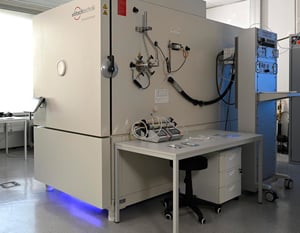
Extreme temperature airbag testing

Airbag systems must function reliably in a wide range of climate conditions — both in extreme cold and at high temperatures inside the vehicle. For this reason, we test airbag systems and interior components under defined environmental and temperature conditions.

This allows material behavior, fracture risks, deployment dynamics, tear seams, component reactions and potential interactions with adjacent interior components to be assessed under realistic conditions.

High-Speed Analysis for Precise Evaluation

For detailed analysis of deployment behavior, we use modern high-speed video technology. This enables relevant airbags in the vehicle interior to be recorded and evaluated, including:

    • Passenger airbags
    • Knee airbags
    • Steering wheel airbags
    • Side curtain airbags
    • Seat airbags

Depending on the test setup, complex scenarios involving multiple airbag systems can also be analyzed. The video recordings enable precise post-processing and help identify and technically evaluate abnormalities, delays, contact points, material reactions or other anomalies.

imat Airbag Testing Extreme Temperature_1200x1200px_260625
imat_Accredited_Airbag_Tests_11200x1200px_260625_V2_a

Airbag Testing in North America

imat offers airbag testing capabilities in North America and supports customers with local proximity to OEMs and Tier 1 suppliers in the USA, Mexico and neighboring markets.

Our North American locations enable testing of airbag systems and automotive interior components in development, validation, COP and analysis projects. The available test infrastructure supports, among other things, climate-conditioned airbag tests, high-speed video analysis, deployment testing, occupancy and airbag detection topics, as well as technical evaluations as part of development and release processes.

This enables customers to implement their test programs more efficiently on a regional basis, reduce transport routes and meet project requirements closer to the relevant production and development sites.


Regional Support in the USA and Mexico

With testing locations in the USA and Mexico, imat supports international automotive projects with local technical expertise, automotive experience and project-specific test execution.

The locations offer suitable testing options for airbag- and interior-related validation tasks and can support customer-specific requirements, OEM specifications and project-related test plans.

This provides customers with powerful regional support without disclosing sensitive details about internal equipment or site-specific capacities.


NORM CONFORM. CLEAR. RELIABLE.
TESTS ACCORDING TO GLOBAL STANDARDS.

Our validation follows the standards that stand for safety, quality and reliability worldwide.

DIN, ISO, VDA and OEM specifications determine our testing processes - transparently documented and consistently compliant with standards.
Because the highest standards are the basis for lasting results.


ARE YOU LOOKING FOR A TEST STANDARD? DELIVERY SPECIFICATION? METHOD?

FAQ

Frequently asked questions about the fogging test

What is the fogging test? The fogging test measures the release of volatile substances from materials that can form deposits on surfaces such as windows.
How long does a fogging test take? As a rule, you will receive the results within a few days, depending on the complexity of the materials.
What do I do if the exam is negative? We offer you comprehensive advice and recommendations to take appropriate measures and find alternative materials.
What sample quantities are required for a fogging test?

The sample quantities required for a fogging test depend on the standard and the test method used. Here are the general guidelines:

1. standard DIN 75201 (type A and type B)

  • Type A (glass plate method):
    A sample quantity of 10 cm² is typically required. The sample is placed on a heated plate in a sealed chamber and the volatiles released condense on a glass plate above.

  • Type B (aluminum foil method):
    Similar to type A, a sample volume of approximately 10 cm² is used. However, the volatile substances condense on a cooled aluminum foil.

2. standard ISO 6452 (international standard)

  • Sample quantity:
    Again, a sample size of about 10 cm² is typically required to evaluate the amount of volatiles released at elevated temperature.

3. other specific requirements

Depending on the specific requirements of the customer or OEM standards, sample quantities may vary. It is important to check the respective standards or test requirements carefully.

What is the difference between the reflectometric and gravimetric test method according to DIN 75201?

Method A - Reflectometric method:

  • Principle: This method measures the change in reflectivity on a glass plate on which volatile components from the material sample are deposited.
  • Procedure: A material sample is heated in a beaker while a glass plate above it is cooled to 21°C. The temperature difference causes the volatile components to condense on the glass plate. The reflectance index of the fogged glass plate is then measured to determine the amount of condensed material.
  • Application: This method is particularly suitable for materials for which an exact determination of the optical fog effect is required.

Method B - Gravimetric method:

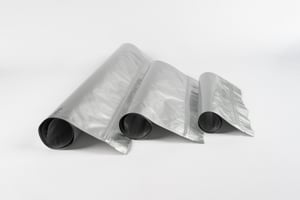
  • Principle: This method measures the weight of condensed volatiles on an aluminum foil.
  • Procedure: The material sample is heated in a beaker while an aluminum foil disc is cooled to 21°C. After 16 hours, the amount of condensed material on the foil is weighed.
  • Application: This method is ideal for an accurate quantitative determination of the amount of condensed volatiles.
Do you have further questions?

CONTACT US

FAQ

FREQUENTLY ASKED QUESTIONS ABOUT THE AIRBAG TEST

Why is airbag testing important?  Airbag testing ensures that airbag systems deploy reliably in an emergency and provide the best possible protection for occupants. At the same time, it verifies that the airbag interacts safely with interior components such as the dashboard, steering wheel, seats and trim parts. 
Which airbag systems can be tested?  Systems that can be tested include passenger airbags, knee airbags, steering wheel airbags, side curtain airbags and seat airbags. Depending on the test setup, multiple airbag systems can also be analyzed at the same time. 
Why are airbags tested at extreme temperatures?

 Heat, cold and climatic stress can affect materials and components. Tests under extreme conditions show whether airbag systems and adjacent interior components function reliably under realistic environmental conditions. 

Do you have any further questions? Our experts will be happy to answer your questions about various laboratory tests. Please feel free to contact us here. We look forward to processing your inquiry and helping you further.