
TEXTILE, LEATHER &
COATED MATERIAL TESTING
How well will your material withstand repeated rubbing and surface wear? When will its appearance begin to change? How will it respond to controlled flame exposure?
We provide abrasion and flammability testing for textiles, leather, synthetic leather, coated fabrics, and multilayer material constructions. Our testing capabilities include the Martindale test according to ISO 12947, abrasion testing according to ISO 5470, and horizontal flammability testing according to FMVSS 302, DIN 75200, ISO 3795, and SAE J369.
Use objective test results to support material selection, product development, supplier qualification, quality assurance, and approval decisions.
A2LA-accredited laboratory network
More than 30 years of automotive testing expertise
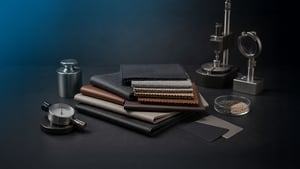
MARTINDALE TEST
FOR TEXTILE ABRASION RESISTANCE
The Martindale test evaluates the abrasion resistance of textile fabrics under repeated rubbing. Depending on the selected test method, the evaluation may focus on specimen breakdown, mass loss, or visible appearance change.
The ISO 12947 series separates these evaluation objectives into different parts, allowing the test program to be matched to the specific performance question.
ISO 12947-2 — Determination of Specimen Breakdown
Is used to determine when a textile specimen reaches a defined breakdown point. The specimen is inspected at specified intervals until the applicable endpoint is reached. The method applies to textile fabrics, including nonwovens, but is not intended for the coated surface of coated or laminated fabrics. Coated surfaces may require a method from the ISO 5470 series.
ISO 12947-3 — Determination of Mass Loss
Focuses on the mass lost by a textile specimen as a result of defined abrasion exposure. This provides a quantitative measurement of material loss and can be useful when comparing constructions, finishes, or material variants.
ISO 12947-4 — Assessment of Appearance Change
Evaluates visible changes in the appearance of a textile surface after abrasion. This method is especially relevant when color, texture, surface structure, fuzzing, pilling, or other visible signs of wear are important product characteristics.
Selecting the correct part of ISO 12947 ensures that the test answers the right question:
- When does the material break down?
- How much material is lost?
- How noticeably does the surface appearance change?
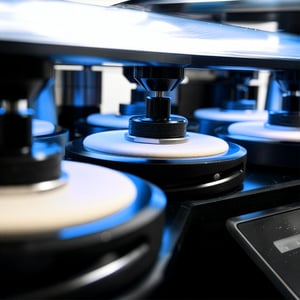
ABRASION TESTING
FOR COATED FABRICS:
ISO 5470-1 and ISO 5470-2
Coated textiles, synthetic leather, vinyl-like materials, and similar surface constructions may require test methods designed specifically for coated fabrics.
The ISO 5470 series addresses the abrasion resistance of rubber- or plastics-coated fabrics and distinguishes between testing with a Taber abrader and testing with a Martindale abrader.
ISO 5470-1 — Taber Abrader describes a method for evaluating the abrasive wear resistance of rubber- or plastics-coated fabrics using a Taber abrader. This method may be appropriate when a coated surface needs to be evaluated under rotating abrasive wear.
ISO 5470-2 — Martindale Abrader specifies wet and dry abrasion methods for the coated surface of rubber- or plastics-coated fabrics using a Martindale abrader. The standard applies to the coated surface. An uncoated textile surface of the same construction is evaluated using the applicable methods in the ISO 12947 series. The current published edition is ISO 5470-2:2021, which replaced the withdrawn 2003 edition.
The choice between ISO 5470-1, ISO 5470-2, and another abrasion method depends on the material construction, surface layer, intended application, and applicable product specification.
For natural or finished leather, the appropriate method should be selected based on the leather type, finish, end use, and customer requirements. ISO 5470 is specifically written for rubber- or plastics-coated fabrics and should not automatically be applied to every leather material.

FLAMMABILITY TESTING
For transportation, mobility, and interior applications, material flammability can be an important safety and approval requirement.
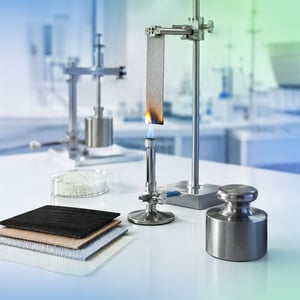
Depending on the specified standard, horizontal flammability testing may evaluate flame propagation, burned distance, burn time, and burning rate under defined laboratory conditions.
FMVSS No. 302 — Flammability of Interior Materials formally referenced as FMVSS No. 302 and codified at 49 CFR § 571.302, the standard establishes burn-resistance requirements for materials used in the occupant compartments of passenger cars, multipurpose passenger vehicles, trucks, and buses.
The regulation identifies components such as seat cushions, seat backs, headliners, trim panels, floor coverings, sun visors, curtains, padding, and other specified interior materials.
Testing and reporting should be based on the required sample construction, material orientation, conditioning, test procedure, and acceptance criteria specified by the regulation and the applicable customer requirements.
DIN 75200 — Burning Behavior of Interior Materials addresses the determination of the burning behavior of materials used in motor vehicle interiors.
ISO 3795 — Horizontal Burning Rate specifies a method for determining the horizontal burning rate of interior materials after exposure to a small flame. Its scope covers materials used in the occupant compartments of road vehicles, as well as certain tractors and agricultural or forestry machinery.
SAE J369 — Horizontal Flammability Test Method describes a horizontal flammability test method for polymeric interior materials. Its scope includes automotive vehicles and off-road, self-propelled work machines.
Are These Flammability Standards Interchangeable?
FMVSS 302, DIN 75200, ISO 3795, and SAE J369 address related horizontal flammability questions, but they should not automatically be treated as identical or interchangeable.
The required standard, edition, specimen construction, conditioning procedure, test direction, and acceptance criteria should be clearly defined before testing begins. This is especially important for FMVSS 302 because it is a U.S. federal safety standard containing both a test procedure and regulatory performance requirements.

BIG GOALS.
STRONG PARTNERS.
WITH US, VISION BECOMES REALITY.
The silent force behind safe mobility
At imat, we don't just test - we protect, strengthen and ensure the quality of your components.
With state-of-the-art testing technology, international accreditation and in-depth expertise, we are the
the invisible force behind reliable performance.
TRUSTED BY AUTOMOTIVE LEADING INDUSTRY
Blank text accreditations/certifications/test standards. Automobile manufacturers worldwide such as Volkswagen, Mercedes-Benz, BMW, Porsche, Tesla & Co. as well as suppliers trust in our expertise and reliability.

FROM TEST REQUIREMENT TO REPORTED RESULT
1. Submit Your Requirements
Provide a description of the material, its intended application, and the required test standard or customer specification. When available, include the applicable acceptance criteria, material drawing, construction details, and required standard revision.
2. Confirm the Test Method and Sample Requirements
We review the material construction and requested specification to determine the appropriate method, sample dimensions, number of specimens, and required conditioning.
3. Perform the Material Test
Testing is conducted under the conditions defined by the agreed test method. Relevant measurements and observations are documented during the test.
4. Receive Your Test Report
The test report documents the material identification, applied test method, test conditions, and results.
Depending on the method, reported results may include:
- Number of abrasion cycles
- Specimen breakdown
- Mass loss
- Appearance change
- Burned distance
- Burn time
- Horizontal burning rate
Where acceptance criteria have been provided, the measured results can also be compared with the applicable specification.

REQUEST
TEXTILE OR LEATHER TESTING
Need to Test a Textile, Leather, or Coated Material?
Send us a brief description of your material and the test requirement.
For the most efficient review, include:
- Material name and construction
- Intended application
- Required standard or customer specification
- Applicable acceptance criteria
- Available sample dimensions and quantities
- Required completion date
We will review test feasibility, confirm the required sample quantity, and prepare a testing quote.

NORM CONFORM. CLEAR. RELIABLE.
TESTS ACCORDING TO GLOBAL STANDARDS.
Our validation follows the standards that stand for safety, quality and reliability worldwide.
DIN, ISO, VDA and OEM specifications determine our testing processes - transparently documented and consistently compliant with standards.
Because the highest standards are the basis for lasting results.




- 01 EMISSION CHAMBER
- 02 FORMALDEHYD
- 03 ODOR
- 04 FOGGING
- 05 MICRO CHAMBER
- 06 THERMODESORPTION
- 07 BAG CHECK
INVISIBLE EMISSIONS,
MEASURABLE RESPONSIBILITY
With our EMISSION CHAMBERS, we test materials, components and assemblies under realistic conditions - precisely, reproducibly and in accordance with OEM standards.

WHY THIS IS IMPORTANT
- Vehicle manufacturers demand clear limit values for VOCs, SVOCs and formaldehyde in the interior
- Strict OEM specifications ensure air quality, brand image and customer satisfaction
- Early testing prevents risks, complaints and delays in series production and comfort as a selling point
WHAT SETS US APART
- Automotive standards: tests according to VDA 276, VW PV 3942, ISO 12219-4, BMW GS 97014-3, DBL 1000 (ISO 12219-4), PN 780 (ISO 12219-4)
- Accreditation: DIN EN ISO 17025, certified according to ISO 9001 and TISAX®.
- Globally consistent: Identical methods and test environments at all imat locations worldwide.
- Holistic analytics: Combination of emission chamber, thermal desorption, odor and fogging analytics.
- 35 years of experience: Trust based on competence, responsibility and quality.
SCOPE OF TESTING & PORTFOLIO
- Emission chamber tests according to VDA 276, ISO 12219-4, BMW GS 97014-3
- VOC, SVOC and formaldehyde analysis of materials, components and assemblies
- Climatic simulation and sample evaluation under realistic conditions
- Advice on results and support with material optimization
LET'S TALK ABOUT CLEAN AIR IN EVERY VEHICLE
Whether development testing or series release - we provide you with clear results, reliable decisions and tested quality in accordance with global automotive standards.
INVISIBLE, BUT CRUCIAL:
FORMALDEHYDE IN INDOOR AIR
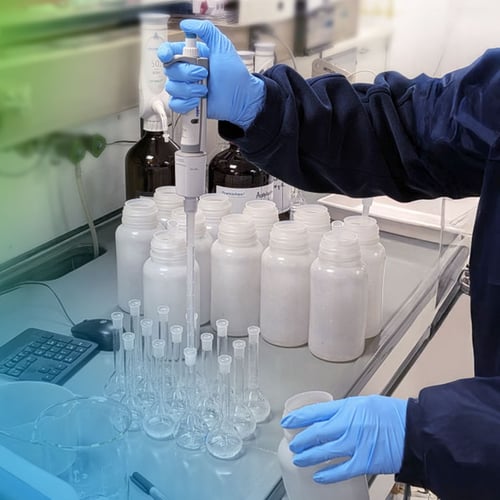
FORMALDEHYD is one of the best-known volatile aldehydes - and is a key parameter for air quality and driving comfort in the automotive industry. Even low concentrations can cause odor, irritation or health effects.
WHY THIS IS IMPORTANT
- Indoor air quality is increasingly becoming a distinguishing feature of modern vehicles.
- Legal limits and OEM specifications are constantly being tightened.
- Early emission tests prevent complaints, damage to image and additional costs.
WHAT SETS US APART
- Experience & trust: Over 35 years of expertise in emissions and air quality testing.
- Global standards: Tests according to 7-G2090, AA 0061, CVTC 54002, D40 3004, D40 5535, FLTM BZ 156-01, GMW 15635, PV 3925, SMTC 5 400 011, TS-INT-001, VCS 1027,2713, VCS 1027,2739, VDA 275
- Accreditation: DIN EN ISO 17025, OEM-approved, ISO 9001 and TISAX® certified.
- Innovative strength: Combination of thermal desorption, emission and odor evaluation for a holistic picture.
- Global presence: Laboratories in Europe, Asia, North America and Africa for fast, consistent results.
SCOPE OF TESTING & PORTFOLIO
- Formaldehyde emission test according to 7-G2090, AA 0061, CVTC 54002, D40 3004, D40 5535, FLTM BZ 156-01, GMW 15635, PV 3925, SMTC 5 400 011, TS-INT-001, VCS 1027,2713, VCS 1027,2739, VDA 275
- Tests on materials, components and systems
- Precise sample preparation as well as HPLC/UV detection and MS detection
- Advice on material optimization and emission reduction
OUR STRENGTH: RESPONSIBILITY DOWN TO THE LAST DETAIL
Whether development testing or series release - we provide you with clear results, reliable decisions and tested quality in accordance with global automotive standards.
WHEN SMELL
BECOMES A MESSAGE
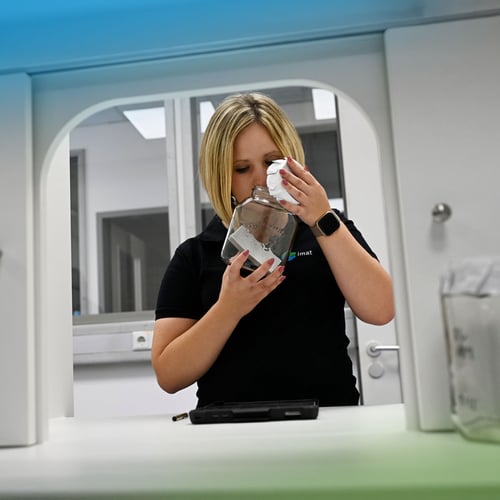
Smell is more than just a sensory impression - it determines trust, well-being and brand loyalty. In car interiors, it becomes a silent brand ambassador: it can arouse enthusiasm or trigger rejection.
WHY THIS IS IMPORTANT
- Increasing customer expectations for comfort and quality
- Strict OEM specifications
- Focus on sustainability and new materials (e.g. recycled materials, biomaterials)
- Faster development cycles and time-to-market pressure
A clear, neutral vehicle interior is no coincidence - it is the result of controlled material selection and careful testing.
with imat you ensure
- brand confidence: Pleasant odor perception strengthens your perception of quality.
- Compliance & approval: Testing according to BAS 455, CS-A0228, CVTC 54003, D10 5517, D49 3001, D49 3046, FLTM BO 131-03, GMW 17914-C, GMW 3205, GS 97014-4, LP-463KC-09-01, MS 300-34, NES M0160, PV 3900, Q/CC JT001, Q/JLY J7110538B, RNES-B-00096, RNES-B-00161, SES N 2405, SJ-NW-81, SMTC 5 400 012, STD 1027,2712, STD 429-0001, TPJLR 52.458, TSM 0505 G, VCS 1027,2729, VDA 270 and others for OEM approvals.
- Root cause analysis: Chemical and sensory evaluation for targeted improvements.
- Efficiency : Fast test cycles and reliable advice - ideal for tight development times.
- Sustainability: Support with new materials, e.g. bio-based or recycled materials.
OUR APPROACH: PEOPLE WHO LIVE PRECISION
Behind every test report is a team that feels responsibility. Our experts combine over 35 years of experience with state-of-the-art testing technology and a global laboratory infrastructure - accredited to DIN EN ISO/IEC 17025 and specializing in the automotive industry.
WHEN TRANSPARENCY
BECOMES A QUESTION OF TRUST
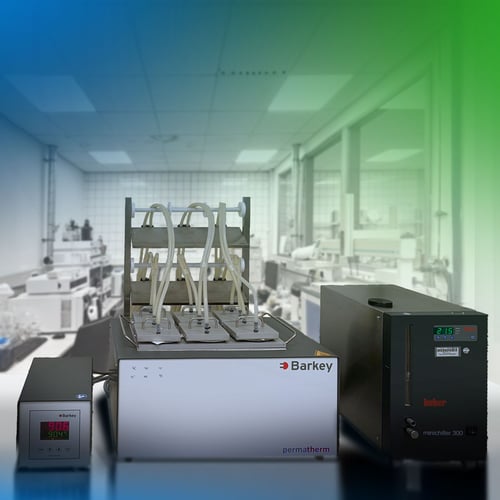
FOGGING is more than just an optical phenomenon - it is a decisive quality factor for vehicle interiors, air quality and customer satisfaction. At imat, we test materials and components for volatile components that can be deposited on cooler glass surfaces in hot weather. This ensures that invisible emissions do not become visible complaints.
WHY THIS IS IMPORTANT
- OEM specifications require low-emission materials.
- Panes with fogging scatter incident light so that the view outside becomes blurred. Critical in the dark and in incident light. Fogging not only affects the appearance, but also health, odor and well-being in the vehicle interior.
WHAT SETS US APART
- Global standards: Tests according to CVTC 54004, D45 1727, DIN 75201, GMW 3235, ISO 6452, PV 3015, Q/CC JT146, Q/JLY J7110341B, RNES-B-00070, SAE J 1756, SMTC 5 400 010, TSM 0503 G, VCS 1027,2719
- Accreditation & trust: DIN EN ISO 17025-compliant, OEM and supplier-approved.
- Worldwide laboratories: In Europe, Asia, North America and Africa - with identical test procedures.
- Innovative testing strategies: Combination of fogging, emission and odor analysis for holistic material evaluation.
SCOPE OF TESTING & PORTFOLIO
- Reflectometric method according to DIN 75201-A "Glass plate test" and gravimetric method according to DIN 75201 B with aluminum foils
- Gravimetric and optical evaluation
- Optional: thermal desorption and GC/MS analysis (VOC, SVOC)
- Consultative evaluation and material optimization
OUR STRENGTH: PEOPLE WHO LIVE PRECISION
Our specialists know that even the smallest amounts of substances can have a big impact.In our accredited laboratories, they analyze materials, components and systems for emissions and fogging effects - using state-of-the-art measurement technology and the experience gained from over 35 years of testing expertise.
WHEN THE SMALL
MAKES THE DIFFERENCE
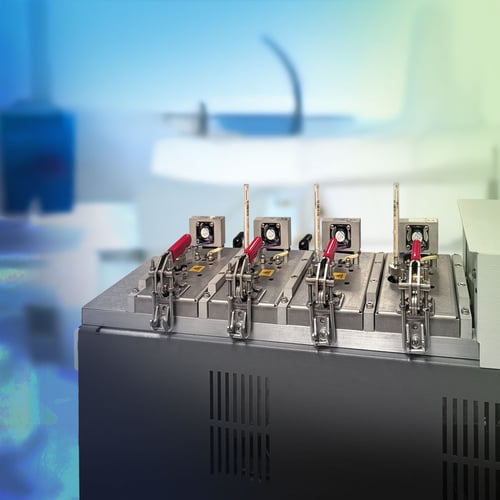
MICROCHAMBER TESTING is the perfect tool for evaluating emissions from individual materials or components during the development process - fast, standardized and meaningful. At imat, we use microchambers to determine VOC, SVOC and aldehyde emissions under controlled conditions. This allows us to ensure material purity, compliance and brand quality before a vehicle is even built.
WHY THIS IS IMPORTANT
- OEMs demand early approval for low-emission materials.
- Shorter development times demand fast, reproducible results.
WHAT SETS US APART
- Accredited procedures: Tests according to CS-13398, FLTM BZ 151-01, GMW 17082, TP-0000912, TPJLR 52.104
- Global consistency: Standardized methods and calibration at all imat locations.
- State-of-the-art analytics: Coupling with thermal desorption and GC/MS for highest sensitivity.
- Holistic approach: Combination of microchamber, bag, odor and fogging analyses.
- Experience & responsibility: Over 35 years of automotive know-how and ISO 17025-accredited laboratories.
OUR SCOPE OF TESTING (EXCERPT)
- Microchamber testing according to VDA 278, ISO 12219-3, PV 3942
- Analysis of VOC, SVOC and aldehydes
- Thermodesorption-GC/MS coupling
- Temperature and climate simulation
- Interpretation of results & advice on material optimization
YOUR ADVANTAGE:
Fast, precise results - measurable, traceable, accredited.
THE INVISIBLE DIMENSION
IN VEHICLE QUALITY
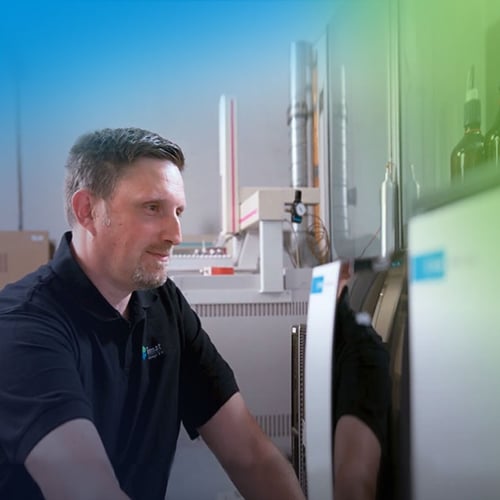
With THERMODESORPTION ANALYSIS, imat precisely identifies volatile substances and evaluates their concentration in accordance with international standards and OEM specifications. In this way, we make the invisible visible - and ensure that your materials are convincing even where they cannot be seen.
WHY THIS IS IMPORTANT
- VOC emissions are key quality and health criteria in the automotive industry.
- Manufacturers are subject to strict standards and regulations on indoor air and material emissions.
- Early material validation prevents complaints, rework and loss of time.
WHAT SETS US APART
- Accredited methods: Thermal desorption GC/MS analyses according to D10 5495, D42 3109, GMW 15634, PPV 8042, VDA 278
- Global standards: Identical test methods at all imat locations for consistent results.
- Innovative measurement technology: Systems for detecting even the lowest VOC concentrations.
- 35 years of experience: Expertise that creates trust - in laboratories on four continents.
- Partnership approach: We don't think in terms of test numbers, but in terms of development goals.
TEST SCOPE & PORTFOLIO
- Thermal desorption (TD-GC/MS) according to VDA 278, ISO 16000-6, EPA TO-17
- Identification and quantification of VOC and SVOC
- Material, component and vehicle component testing
- Supplementary odor and fogging analysis
- Advice on material optimization and reduction of emissions
OUR STRENGTH: PRECISION DOWN TO THE INVISIBLE
Our thermal desorption specialists see themselves as the silent heroes of analysis. They combine experience, meticulousness and state-of-the-art technology to reliably evaluate every sample - from raw materials to complex components.
BAG TESTING: OUR PROTECTIVE SHIELD
AGAINST INVISIBLE EMISSIONS
BAG TESTING is a key procedure for analysing volatile substances (VOC, SVOC, formaldehyde, odorous substances) before they can affect the air quality in the vehicle. At imat, we test materials, components or complete parts in specially conditioned test bags. This enables us to identify emissions at an early stage.

WHY THIS IS IMPORTANT
- Strict OEM specifications regulate the interior air quality of modern vehicles.
- New materials and recyclates pose new challenges because they also have to meet the existing requirements with the existing tests
WHAT SETS US APART
- We test a range of standards: For example BAS 483, CS-A0229, CVTC 54072, D10 0003, DWG 0094Z, ES X83252E, FLTM BZ 108-01, GMW 17914-A, MS 300-55, NES M0402-01, NES M0402-02, Q/CC SY248, Q/CC SY349, Q/JLY J7110274B, RTS 1745, SES N 2403 and many more
- Global consistency: Identical test environments at all imat laboratory locations worldwide.
- Holistic analytics: Combination of bag, thermal desorption, fogging and odor evaluation.
- Experience: Over 35 years of automotive expertise and partnership with leading OEMs.
- Responsibility: We think beyond test numbers - in solutions, safety and trust.
OUR SCOPE OF TESTING (EXCERPT)
- VOC, SVOC and aldehyde analyses
- Emission assessment of materials, components and assemblies
- Coupling with odor and fogging tests
- Evaluation of results & advice on material optimization
YOUR ADVANTAGE: MEASURABLE SAFETY IN EVERY DEVELOPMENT PHASE

BIG GOALS.
STRONG PARTNERS.
FULL SPEED AHEAD TO THE OVERALL PORTFOLIO.
The silent force behind safe mobility
At imat, we don't just test - we protect, strengthen and ensure the quality of your components.
With state-of-the-art testing technology, international accreditation and in-depth expertise,
we are the invisible force behind reliable performance.
TESTED QUALITY - YOUR ADVANTAGE THROUGH TRUST:
- Safety - reliable materials and systems
- Compliance - fulfillment of standards, laws & OEM specifications
- Competitiveness - quality, durability and comfort as selling points
Our promise to you
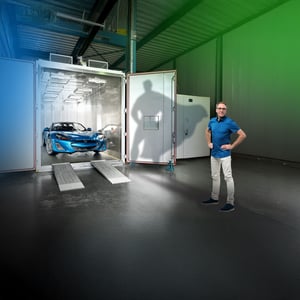
We support companies along the supply chain in making materials, components and vehicles safe, sustainable and ready for series production for the mobility of the future. To this end, we offer independent testing and expert advice - backed by over 35 years of experience and a deep understanding of our customers' challenges. With a global presence, we support projects in all relevant markets, combine international standards with regional requirements and thus create real added value locally. imat services combine maximum reliability, efficient processes and market-driven prices with technical excellence.
Together, we create trust in innovative mobility solutions and make a measurable contribution to economic efficiency and ecological responsibility.
BIG GOALS.
STRONG PARTNERS.
FULL THROTTLE TO THE COMPLETE PORTFOLIO.
The silent force behind safe mobility
At imat, we don't just test - we protect, strengthen and ensure the quality of your components. With state-of-the-art testing technology, international accreditation and in-depth expertise, we are the invisible force behind reliable performance.