
RELIABLE TEST DATA FOR CLEANER VEHICLE INTERIORS CONFIDENT MATERIAL DECISIONS AND FASTER OEM APPROVAL
Vehicle interior air quality is more than a compliance requirement. It influences occupant comfort, perceived quality, brand reputation and the success of a vehicle program. imat supports North American automotive OEMs, Tier 1 suppliers, material manufacturers and engineering teams with specialized testing for volatile organic compounds, odor, fogging, formaldehyde and component emissions.
From early material screening to the validation of complete assemblies, our automotive laboratories provide precise, actionable results based on internationally recognized standards and OEM-specific specifications.
A2LA-accredited laboratory network
ISO/IEC 17025-accredited testing
More than 30 years of automotive testing expertise
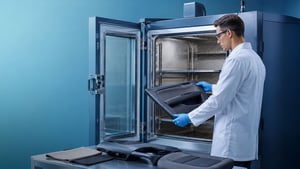
ONE LABORATORY PARTNER FOR EMISSIONS TESTING
Automotive VOC Testing
Our automotive VOC testing services help identify and quantify volatile and semi-volatile organic compounds released from non-metallic vehicle interior materials.
Depending on your specification and test objective, testing may be performed using direct material methods, headspace analysis, thermal desorption, bag methods, micro-scale chambers or larger emission chambers.
Typical applications include:
- Material qualification
- Supplier comparison
- Incoming quality control
- Root-cause investigations
- Benchmarking of alternative formulations
- Pre-production validation
- OEM approval programs
- Batch-to-batch quality monitoring
We test plastics, textiles, leather, synthetic leather, carpet systems, foams, adhesives, sealants, coatings, films and multi-material assemblies.
Relevant methods and specifications may include VDA 277, PV 3341, GMW15634 and methods from the ISO 12219 series.

BIG GOALS.
STRONG PARTNERS.
WITH US, VISION BECOMES REALITY.
The silent force behind safe mobility
At imat, we don't just test - we protect, strengthen and ensure the quality of your components.
With state-of-the-art testing technology, international accreditation and in-depth expertise, we are the
the invisible force behind reliable performance.
TRUSTED BY AUTOMOTIVE LEADING INDUSTRY
Blank text accreditations/certifications/test standards. Automobile manufacturers worldwide such as Volkswagen, Mercedes-Benz, BMW, Porsche, Tesla & Co. as well as suppliers trust in our expertise and reliability.




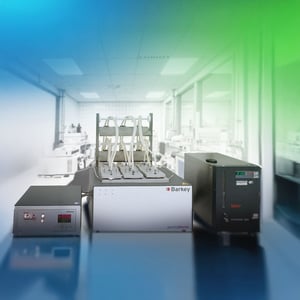
FOGGING TEST
Condensable emissions from vehicle interior materials may form a visible film or haze on windshields, lenses and other cooler surfaces. This effect can reduce perceived quality and, in severe cases, interfere with visibility.
An automotive fogging test evaluates the tendency of a material to release substances that may condense on nearby surfaces.
Depending on the applicable specification, the fogging behavior can be assessed using reflectometric, photometric or gravimetric methods.
Our capabilities support testing according to specifications such as:
- DIN 75201
- SAE J1756
- OEM-specific fogging procedures
- Reflectometric fogging methods
- Gravimetric fogging methods
Fogging evaluations are particularly relevant for:
- Instrument-panel materials
- Interior trim
- Seating materials
- Headliners
- Carpet systems
- Adhesives
- Foams
- Synthetic leather
- Coatings and decorative films
- HVAC-adjacent materials
By identifying high-fogging materials early, development teams can compare formulations and reduce the risk of late-stage component failure.
ODOR TEST
Odor is one of the first characteristics occupants notice when entering a vehicle. Even when a material meets chemical emission limits, an unfamiliar, intense or unpleasant odor can negatively affect the customer’s perception of quality.
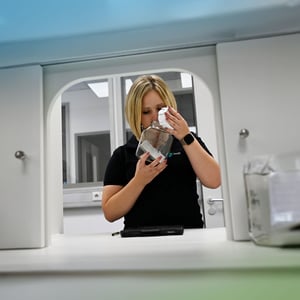
Our trained sensory panels evaluate the odor characteristics of materials, individual parts, assemblies, chamber air and, where applicable, complete vehicle air.
Our odor testing automotive services support:
- Material selection
- Supplier qualification
- Production quality control
- Complaint investigations
- Odor-source identification
- Validation after process or formulation changes
- Comparison of recycled and conventional materials
- Evaluation of biomaterials and sustainable alternatives
Testing can be performed according to the VDA 270 odor test, PV 3900, ISO 12219-7, SAE J1351 and other OEM-specific requirements.
Standardized sensory evaluation
For a typical material odor evaluation, defined specimens are placed in suitable test containers and conditioned for a specified period at a controlled temperature. A trained panel then evaluates the test air using the criteria and rating scale required by the applicable specification.
Where appropriate, the sensory assessment can be combined with chemical emission analysis. This combination provides a more complete understanding of both the odor impression and the substances that may be contributing to it.

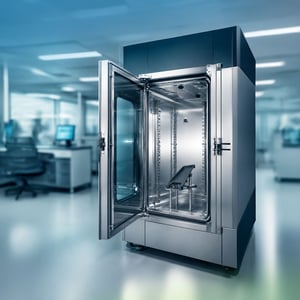
EMISSION CHAMBER TESTING FOR COMPONENTS AND ASSEMBLIES
Material-level tests are essential during early development, but they do not always predict the emission behavior of a complete component. Finished parts often contain several materials, adhesives, coatings and production-related substances. Layering, bonding, geometry and manufacturing conditions can influence how the final assembly behaves.
Emission chamber testing evaluates parts and components as complete systems under controlled environmental conditions.
Applications include:
- Instrument panels
- Door panels
- Seating components
- Center consoles
- Headliners
- Carpet assemblies
- Trunk and cargo-area trim
- Insulation systems
- HVAC-related components
- Multi-material interior modules
During chamber testing, emitted compounds accumulate in controlled test air. Depending on the required method, total emissions may be monitored and air samples collected for subsequent laboratory analysis. Testing may include chemical VOC analysis, aldehyde analysis and sensory evaluation of chamber air. Relevant specifications include PV 3942 and selected methods within the ISO 12219 series.
Better representation of real component behavior
Compared with isolated material testing, emission chamber testing can provide a more representative assessment of:
- Combined material emissions
- Interactions between material layers
- Contributions from adhesives and coatings
- Manufacturing-process residues
- Emission behavior of the complete part
- Potential contributions to complete-vehicle cabin air
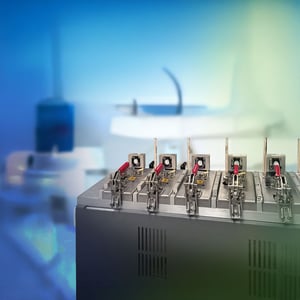
MICROCHAMBER TESTING FOR FAST MATERIAL SCREENING
Microchamber testing is a highly efficient option for evaluating small samples of automotive interior materials and composites.
The method can support the measurement of VOCs, aldehydes and other emissions under controlled conditions while requiring less sample material than conventional component chambers.
Microchamber testing is especially useful for:
- Early material development
- Rapid comparison of formulations
- Screening of low-emission alternatives
- Investigation of individual composite layers
- Development of recycled materials
- Evaluation of biomaterials
- Routine material quality control
- Pre-screening before larger chamber tests
Methods may include ISO 12219-3 and other OEM-specific micro-scale chamber procedures.
For development teams working with limited prototype material, microchamber testing can provide valuable emissions data before full components are available.
FORMALDEHYDE AND CARBONYL COMPOUD TESTING
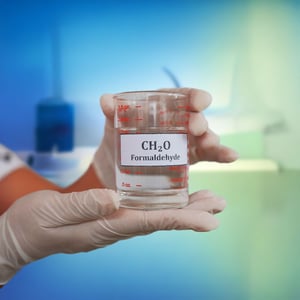
Formaldehyde and other carbonyl compounds can originate from resins, adhesives, textiles, foams, coatings and composite materials used in vehicle interiors.
Our laboratories support the determination of formaldehyde and related compounds using methods selected according to the material type, component and applicable OEM requirement.
Formaldehyde testing can help your team:
- Evaluate raw materials
- Compare adhesive systems
- Investigate production-related emissions
- Verify supplier declarations
- Assess corrective actions
- Support interior air quality targets
- Meet OEM-specific material requirements
For complex programs, formaldehyde analysis can be combined with VOC, odor and chamber testing to create a comprehensive emissions profile.
WHY AUTOMOTIVE TEAMS
CHOOSE IMAT
More than 30 years of automotive experience
Our work is focused on the automotive industry. We understand the demands of vehicle development, supplier approval, material qualification and production quality. And we are A2LA and ISO/IEC 17025 accredited.
Material-to-component testing
We can support projects from initial material screening through the testing of complex parts and assemblies.
Broad analytical capabilities
VOC, odor, fogging, formaldehyde, microchamber and component chamber testing can be combined within a coordinated program.
Support with method selection
Not every test answers the same question. Our specialists help you select a method that matches your sample, development stage and customer requirement.
Actionable technical insight
When results do not meet requirements, data interpretation matters. Our experts can support further investigation, comparison testing and development of an appropriate follow-up strategy.
International program support
Our global network helps automotive customers manage specifications and testing needs across multiple markets.

READY TO LOOK TO THE FUTURE?
Artificial exposure is more than just a laboratory test.
It is a controlled look into the future of your vehicles and components long before they hit the road. With our "superpower" of time acceleration, we help you make better decisions and develop long-lasting quality.
Talk to us about customized exposure and aging tests for your needs.

NORM CONFORM. CLEAR. RELIABLE.
TESTS ACCORDING TO GLOBAL STANDARDS.
Our validation follows the standards that stand for safety, quality and reliability worldwide.
DIN, ISO, VDA and OEM specifications determine our testing processes - transparently documented and consistently compliant with standards.
Because the highest standards are the basis for lasting results.




- 01 EMISSION CHAMBER
- 02 FORMALDEHYD
- 03 ODOR
- 04 FOGGING
- 05 MICRO CHAMBER
- 06 THERMODESORPTION
- 07 BAG CHECK
INVISIBLE EMISSIONS,
MEASURABLE RESPONSIBILITY
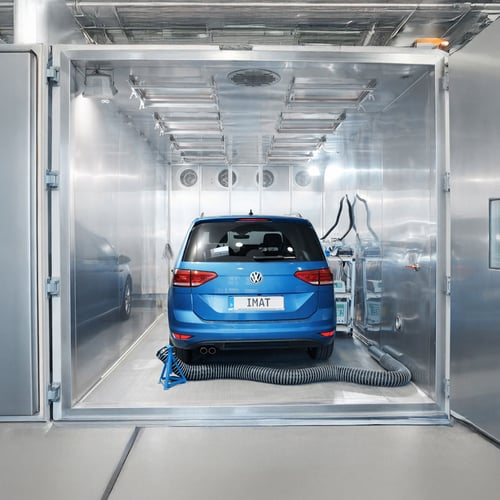
With our EMISSION CHAMBERS, we test materials, components and assemblies under realistic conditions - precisely, reproducibly and in accordance with OEM standards.
WHY THIS IS IMPORTANT
- Vehicle manufacturers demand clear limit values for VOCs, SVOCs and formaldehyde in the interior
- Strict OEM specifications ensure air quality, brand image and customer satisfaction
- Early testing prevents risks, complaints and delays in series production and comfort as a selling point
WHAT SETS US APART
- Automotive standards: tests according to VDA 276, VW PV 3942, ISO 12219-4, BMW GS 97014-3, DBL 1000 (ISO 12219-4), PN 780 (ISO 12219-4)
- Accreditation: DIN EN ISO 17025, certified according to ISO 9001 and TISAX®.
- Globally consistent: Identical methods and test environments at all imat locations worldwide.
- Holistic analytics: Combination of emission chamber, thermal desorption, odor and fogging analytics.
- 35 years of experience: Trust based on competence, responsibility and quality.
SCOPE OF TESTING & PORTFOLIO
- Emission chamber tests according to VDA 276, ISO 12219-4, BMW GS 97014-3
- VOC, SVOC and formaldehyde analysis of materials, components and assemblies
- Climatic simulation and sample evaluation under realistic conditions
- Advice on results and support with material optimization
LET'S TALK ABOUT CLEAN AIR IN EVERY VEHICLE
Whether development testing or series release - we provide you with clear results, reliable decisions and tested quality in accordance with global automotive standards.
INVISIBLE, BUT CRUCIAL:
FORMALDEHYDE IN INDOOR AIR
FORMALDEHYD is one of the best-known volatile aldehydes - and is a key parameter for air quality and driving comfort in the automotive industry. Even low concentrations can cause odor, irritation or health effects.
WHY THIS IS IMPORTANT
- Indoor air quality is increasingly becoming a distinguishing feature of modern vehicles.
- Legal limits and OEM specifications are constantly being tightened.
- Early emission tests prevent complaints, damage to image and additional costs.
WHAT SETS US APART
- Experience & trust: Over 35 years of expertise in emissions and air quality testing.
- Global standards: Tests according to 7-G2090, AA 0061, CVTC 54002, D40 3004, D40 5535, FLTM BZ 156-01, GMW 15635, PV 3925, SMTC 5 400 011, TS-INT-001, VCS 1027,2713, VCS 1027,2739, VDA 275
- Accreditation: DIN EN ISO 17025, OEM-approved, ISO 9001 and TISAX® certified.
- Innovative strength: Combination of thermal desorption, emission and odor evaluation for a holistic picture.
- Global presence: Laboratories in Europe, Asia, North America and Africa for fast, consistent results.
SCOPE OF TESTING & PORTFOLIO
- Formaldehyde emission test according to 7-G2090, AA 0061, CVTC 54002, D40 3004, D40 5535, FLTM BZ 156-01, GMW 15635, PV 3925, SMTC 5 400 011, TS-INT-001, VCS 1027,2713, VCS 1027,2739, VDA 275
- Tests on materials, components and systems
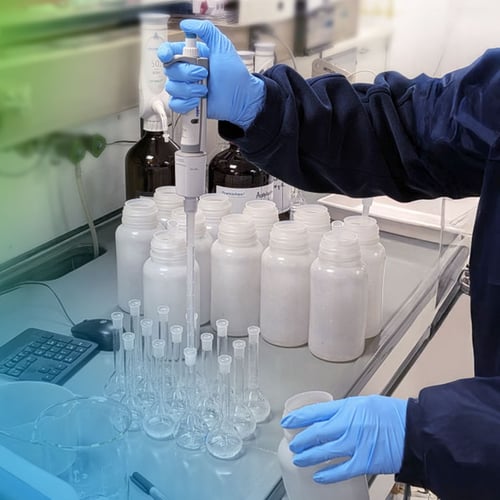
- Precise sample preparation as well as HPLC/UV detection and MS detection
- Advice on material optimization and emission reduction
OUR STRENGTH: RESPONSIBILITY DOWN TO THE LAST DETAIL
Whether development testing or series release - we provide you with clear results, reliable decisions and tested quality in accordance with global automotive standards.
WHEN SMELL
BECOMES A MESSAGE
Smell is more than just a sensory impression - it determines trust, well-being and brand loyalty. In car interiors, it becomes a silent brand ambassador: it can arouse enthusiasm or trigger rejection.
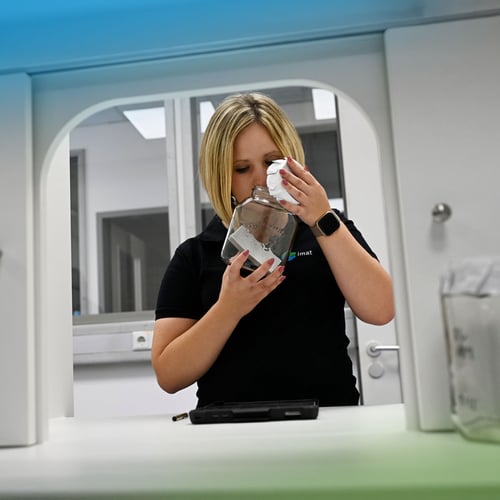
WHY THIS IS IMPORTANT
- Increasing customer expectations for comfort and quality
- Strict OEM specifications
- Focus on sustainability and new materials (e.g. recycled materials, biomaterials)
- Faster development cycles and time-to-market pressure
A clear, neutral vehicle interior is no coincidence - it is the result of controlled material selection and careful testing.
with imat you ensure
- brand confidence: Pleasant odor perception strengthens your perception of quality.
- Compliance & approval: Testing according to BAS 455, CS-A0228, CVTC 54003, D10 5517, D49 3001, D49 3046, FLTM BO 131-03, GMW 17914-C, GMW 3205, GS 97014-4, LP-463KC-09-01, MS 300-34, NES M0160, PV 3900, Q/CC JT001, Q/JLY J7110538B, RNES-B-00096, RNES-B-00161, SES N 2405, SJ-NW-81, SMTC 5 400 012, STD 1027,2712, STD 429-0001, TPJLR 52.458, TSM 0505 G, VCS 1027,2729, VDA 270 and others for OEM approvals.
- Root cause analysis: Chemical and sensory evaluation for targeted improvements.
- Efficiency : Fast test cycles and reliable advice - ideal for tight development times.
- Sustainability: Support with new materials, e.g. bio-based or recycled materials.
OUR APPROACH: PEOPLE WHO LIVE PRECISION
Behind every test report is a team that feels responsibility. Our experts combine over 35 years of experience with state-of-the-art testing technology and a global laboratory infrastructure - accredited to DIN EN ISO/IEC 17025 and specializing in the automotive industry.
WHEN TRANSPARENCY
BECOMES A QUESTION OF TRUST
FOGGING is more than just an optical phenomenon - it is a decisive quality factor for vehicle interiors, air quality and customer satisfaction. At imat, we test materials and components for volatile components that can be deposited on cooler glass surfaces in hot weather. This ensures that invisible emissions do not become visible complaints.
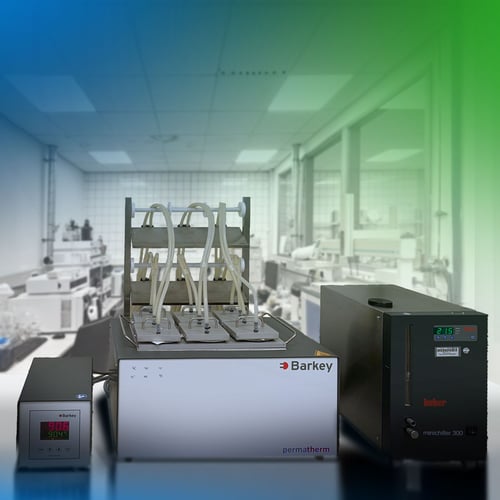
WHY THIS IS IMPORTANT
- OEM specifications require low-emission materials.
- Panes with fogging scatter incident light so that the view outside becomes blurred. Critical in the dark and in incident light. Fogging not only affects the appearance, but also health, odor and well-being in the vehicle interior.
WHAT SETS US APART
- Global standards: Tests according to CVTC 54004, D45 1727, DIN 75201, GMW 3235, ISO 6452, PV 3015, Q/CC JT146, Q/JLY J7110341B, RNES-B-00070, SAE J 1756, SMTC 5 400 010, TSM 0503 G, VCS 1027,2719
- Accreditation & trust: DIN EN ISO 17025-compliant, OEM and supplier-approved.
- Worldwide laboratories: In Europe, Asia, North America and Africa - with identical test procedures.
- Innovative testing strategies: Combination of fogging, emission and odor analysis for holistic material evaluation.
SCOPE OF TESTING & PORTFOLIO
- Reflectometric method according to DIN 75201-A "Glass plate test" and gravimetric method according to DIN 75201 B with aluminum foils
- Gravimetric and optical evaluation
- Optional: thermal desorption and GC/MS analysis (VOC, SVOC)
- Consultative evaluation and material optimization
OUR STRENGTH: PEOPLE WHO LIVE PRECISION
Our specialists know that even the smallest amounts of substances can have a big impact.In our accredited laboratories, they analyze materials, components and systems for emissions and fogging effects - using state-of-the-art measurement technology and the experience gained from over 35 years of testing expertise.
WHEN THE SMALL
MAKES THE DIFFERENCE
MICROCHAMBER TESTING is the perfect tool for evaluating emissions from individual materials or components during the development process - fast, standardized and meaningful. At imat, we use microchambers to determine VOC, SVOC and aldehyde emissions under controlled conditions. This allows us to ensure material purity, compliance and brand quality before a vehicle is even built.
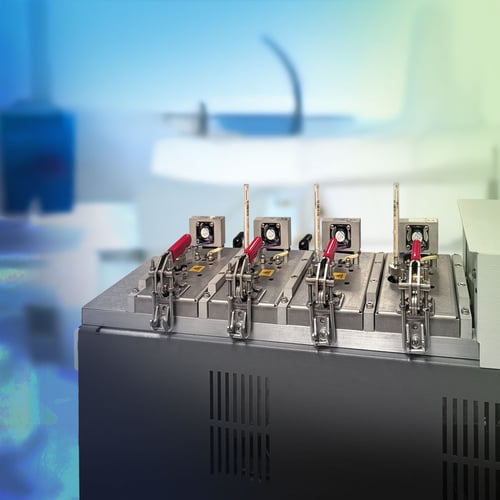
WHY THIS IS IMPORTANT
- OEMs demand early approval for low-emission materials.
- Shorter development times demand fast, reproducible results.
WHAT SETS US APART
- Accredited procedures: Tests according to CS-13398, FLTM BZ 151-01, GMW 17082, TP-0000912, TPJLR 52.104
- Global consistency: Standardized methods and calibration at all imat locations.
- State-of-the-art analytics: Coupling with thermal desorption and GC/MS for highest sensitivity.
- Holistic approach: Combination of microchamber, bag, odor and fogging analyses.
- Experience & responsibility: Over 35 years of automotive know-how and ISO 17025-accredited laboratories.
OUR SCOPE OF TESTING (EXCERPT)
- Microchamber testing according to VDA 278, ISO 12219-3, PV 3942
- Analysis of VOC, SVOC and aldehydes
- Thermodesorption-GC/MS coupling
- Temperature and climate simulation
- Interpretation of results & advice on material optimization
YOUR ADVANTAGE:
Fast, precise results - measurable, traceable, accredited.
THE INVISIBLE DIMENSION
IN VEHICLE QUALITY
With THERMODESORPTION ANALYSIS, imat precisely identifies volatile substances and evaluates their concentration in accordance with international standards and OEM specifications. In this way, we make the invisible visible - and ensure that your materials are convincing even where they cannot be seen.
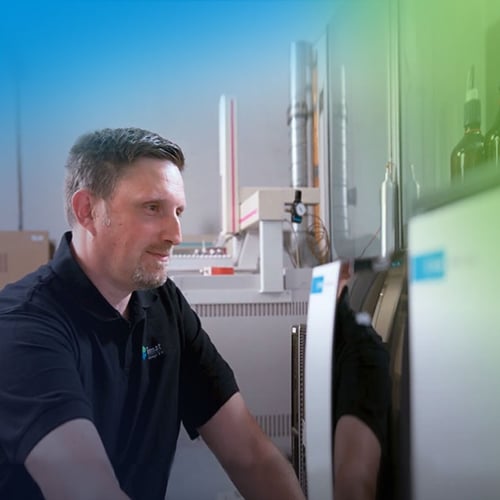
WHY THIS IS IMPORTANT
- VOC emissions are key quality and health criteria in the automotive industry.
- Manufacturers are subject to strict standards and regulations on indoor air and material emissions.
- Early material validation prevents complaints, rework and loss of time.
WHAT SETS US APART
- Accredited methods: Thermal desorption GC/MS analyses according to D10 5495, D42 3109, GMW 15634, PPV 8042, VDA 278
- Global standards: Identical test methods at all imat locations for consistent results.
- Innovative measurement technology: Systems for detecting even the lowest VOC concentrations.
- 35 years of experience: Expertise that creates trust - in laboratories on four continents.
- Partnership approach: We don't think in terms of test numbers, but in terms of development goals.
TEST SCOPE & PORTFOLIO
- Thermal desorption (TD-GC/MS) according to VDA 278, ISO 16000-6, EPA TO-17
- Identification and quantification of VOC and SVOC
- Material, component and vehicle component testing
- Supplementary odor and fogging analysis
- Advice on material optimization and reduction of emissions
OUR STRENGTH: PRECISION DOWN TO THE INVISIBLE
Our thermal desorption specialists see themselves as the silent heroes of analysis. They combine experience, meticulousness and state-of-the-art technology to reliably evaluate every sample - from raw materials to complex components.
BAG TESTING: OUR PROTECTIVE SHIELD
AGAINST INVISIBLE EMISSIONS
BAG TESTING is a key procedure for analysing volatile substances (VOC, SVOC, formaldehyde, odorous substances) before they can affect the air quality in the vehicle. At imat, we test materials, components or complete parts in specially conditioned test bags. This enables us to identify emissions at an early stage.
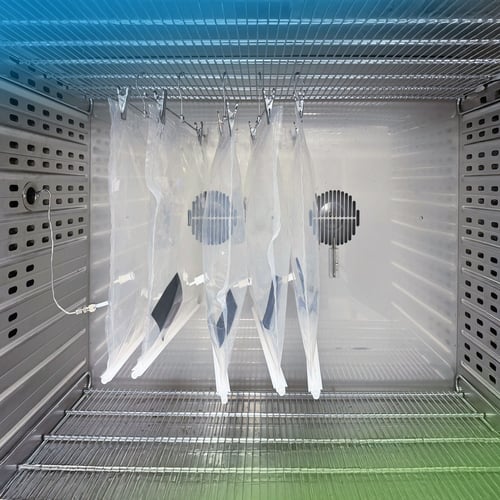
WHY THIS IS IMPORTANT
- Strict OEM specifications regulate the interior air quality of modern vehicles.
- New materials and recyclates pose new challenges because they also have to meet the existing requirements with the existing tests
WHAT SETS US APART
- We test a range of standards: For example BAS 483, CS-A0229, CVTC 54072, D10 0003, DWG 0094Z, ES X83252E, FLTM BZ 108-01, GMW 17914-A, MS 300-55, NES M0402-01, NES M0402-02, Q/CC SY248, Q/CC SY349, Q/JLY J7110274B, RTS 1745, SES N 2403 and many more
- Global consistency: Identical test environments at all imat laboratory locations worldwide.
- Holistic analytics: Combination of bag, thermal desorption, fogging and odor evaluation.
- Experience: Over 35 years of automotive expertise and partnership with leading OEMs.
- Responsibility: We think beyond test numbers - in solutions, safety and trust.
OUR SCOPE OF TESTING (EXCERPT)
- VOC, SVOC and aldehyde analyses
- Emission assessment of materials, components and assemblies
- Coupling with odor and fogging tests
- Evaluation of results & advice on material optimization
YOUR ADVANTAGE: MEASURABLE SAFETY IN EVERY DEVELOPMENT PHASE


BIG GOALS.
STRONG PARTNERS.
FULL SPEED AHEAD TO THE OVERALL PORTFOLIO.
The silent force behind safe mobility
At imat, we don't just test - we protect, strengthen and ensure the quality of your components.
With state-of-the-art testing technology, international accreditation and in-depth expertise,
we are the invisible force behind reliable performance.
TESTED QUALITY - YOUR ADVANTAGE THROUGH TRUST:
- Safety - reliable materials and systems
- Compliance - fulfillment of standards, laws & OEM specifications
- Competitiveness - quality, durability and comfort as selling points
Our promise to you
We support companies along the supply chain in making materials, components and vehicles safe, sustainable and ready for series production for the mobility of the future. To this end, we offer independent testing and expert advice - backed by over 35 years of experience and a deep understanding of our customers' challenges. With a global presence, we support projects in all relevant markets, combine international standards with regional requirements and thus create real added value locally. imat services combine maximum reliability, efficient processes and market-driven prices with technical excellence.
Together, we create trust in innovative mobility solutions and make a measurable contribution to economic efficiency and ecological responsibility.
BIG GOALS.
STRONG PARTNERS.
FULL THROTTLE TO THE COMPLETE PORTFOLIO.
The silent force behind safe mobility
At imat, we don't just test - we protect, strengthen and ensure the quality of your components. With state-of-the-art testing technology, international accreditation and in-depth expertise, we are the invisible force behind reliable performance.