
AUTOMOTIVE E/E
QUALIFICATION AND VALIDATION
Validate automotive electrical and electronic components under the mechanical, electrical, climatic, and chemical loads they may experience in the vehicle.
imat develops coordinated test programs for ECUs, sensors, actuators, connectors, power distribution units, motors, lighting modules, and other automotive E/E assemblies. Our services can combine shaker testing, vibration, mechanical shock, functional checks, environmental exposure, and chemical resistance testing in one traceable qualification plan.
From early design verification to final qualification, we help your engineering team identify weak points, confirm functional performance, and document results against the applicable standard or OEM specification.
A2LA-accredited laboratory network
More than 30 years of automotive testing expertise.
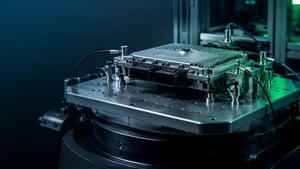
ISO 16750-3 SHAKER TESTING
FOR MECHANICAL LOADS
An ISO 16750-3 shaker test is not a one-size-fits-all vibration run. The applicable mechanical loads depend on the component’s mounting location and the requirements defined for that installation.
ISO 16750-3 covers mechanical loads for electrical and electronic systems and components in vehicles. Its official contents include vibration and mechanical shock, while the standard’s scope connects recommended tests and requirements to the mounting location in or on the vehicle.
A shaker test program may include
- Resonance search and sine sweep
- Sinusoidal vibration
- Sine dwell at identified frequencies
- Broadband random vibration
- Multi-axis vibration sequences
- Mechanical shock on suitable test equipment
- Powered or unpowered operation as specified
- CAN, LIN, discrete I/O, voltage, current, or signal monitoring
- Intermediate and final functional inspections
- Fixture and mounting-interface evaluation
IEC 60068-2-6 provides a standardized approach for sinusoidal vibration, IEC 60068-2-64 addresses broadband random vibration, and IEC 60068-2-27 covers mechanical shock. The applicable product or OEM specification must define the required severity, duration, axes, pulse shape, operating mode, and acceptance limits.
More than simply placing a component on a shaker
The fixture, mounting points, wiring, cable restraint, accelerometer positions, and control strategy are part of the test system. These elements should be reviewed before testing so that fixture behavior can be distinguished from the response of the component itself. Where required by the specification, the device can also be monitored during the shaker test to detect intermittent electrical behavior that may not remain visible after the vibration stops.
Typical issues investigated during mechanical testing include:
- Resonance-related failures
- Loose connectors or fasteners
- Intermittent contacts
- Housing or bracket damage
- PCB and solder-joint fatigue
- Wire or terminal damage
- Loss of calibration or signal stability
- Changes in electrical or mechanical performance

LV 124 TESTING FOR
AUTOMOTIVE E/E COMPONENTS
For an LV 124 or LV124 project, [Company Name] converts the customer-supplied revision into a practical, clause-by-clause test plan.
The program can coordinate electrical, mechanical, climatic, chemical, and functional test activities while keeping the specified sequence, operating modes, sample allocation, conditioning periods, and pass/fail criteria traceable.
Our LV 124 planning process addresses questions such as:
- Which requirements apply to the component?
- Which tests require the component to be powered?
- Which loads must be applied sequentially?
- Is functional monitoring required during shaker testing?
- Which vehicle mounting category or installation condition applies?
- How many test samples and sample groups are required?
- Which inspections are required before, during, and after exposure?
- What constitutes a reportable interruption or failure?
Because customer revisions and OEM adaptations may differ, we use the controlled project document as the technical basis. We do not assume that a generic LV 124 summary contains all applicable requirements.
LV 124 shaker and vibration testing
When the test matrix includes mechanical loads, shaker testing can be coordinated with the required functional states and environmental preconditioning. This provides a clearer picture of whether the component remains mechanically intact and electrically functional throughout the required exposure.

ISO 16750-5
CHEMICAL LOAD TESTING
Mechanical durability is only one part of automotive component validation. Materials, seals, labels, connectors, coatings, housings, and electrical interfaces may also be affected by chemicals encountered during manufacturing, vehicle operation, cleaning, maintenance, or service.
ISO 16750-5 addresses chemical loads for automotive electrical and electronic systems and components. Like the mechanical-load part of the series, its requirements are considered in relation to the component’s mounting location.
A chemical load test plan should define:
- The applicable chemical agents
- Concentration and preparation requirements
- Application method
- Exposure time and temperature
- Conditioning or recovery period
- Cleaning instructions, where applicable
- Powered or unpowered condition
- Visual and dimensional evaluation
- Functional and electrical acceptance criteria
Chemical exposure can reveal swelling, softening, cracking, discoloration, loss of adhesion, label damage, seal degradation, corrosion, leakage, or changes in electrical performance.
By coordinating ISO 16750-5 testing with the mechanical and functional parts of the qualification plan, engineering teams can evaluate the component as a complete assembly rather than assessing materials in isolation.
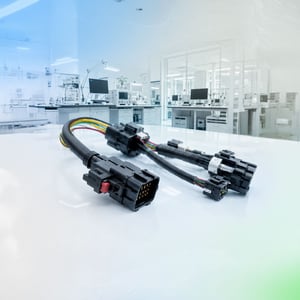
VW 80000, GS 95024-3-1,
AND CS.00056 TEST PROGRAMS
OEM specifications may modify or add test conditions, operating modes, sample groups, documentation requirements, sequences, or acceptance criteria.
imat can develop test programs against customer-supplied, controlled editions of the following specifications:
VW 80000 Testing
For VW 80000 projects, we review the applicable revision and translate the required electrical, environmental, functional, and mechanical test activities into a traceable test matrix. The planning process identifies fixture requirements, DUT operating states, test sequences, monitoring parameters, inspections, and reporting requirements before testing begins.
GS 95024-3-1 Testing
For GS 95024-3-1 qualification programs, the controlled specification and project-specific requirements are reviewed clause by clause. Where mechanical testing is required, the test plan defines the applicable shaker profile, component orientation, mounting configuration, wiring arrangement, functional state, and interruption criteria.
CS.00056 Testing
For CS.00056 projects, we develop the test scope around the applicable component requirements, installation conditions, test sequences, functional checks, and customer acceptance criteria. Mechanical vibration, shock, environmental exposure, chemical testing, and electrical operation can be coordinated within the overall qualification matrix when required by the controlled specification.
No automatic equivalence between specifications
Although ISO standards, LV 124, and OEM documents may contain similar test categories, they should not be treated as automatically interchangeable.
When a project references more than one document, we create a cross-reference that identifies:
- Requirements that overlap
- Different test severities or durations
- Additional OEM conditions
- Different operating states
- Sample allocation differences
- Sequence and conditioning requirements
- Reporting and approval requirements
This approach helps prevent missing test legs, unnecessary duplicate testing, and late changes to the qualification program.
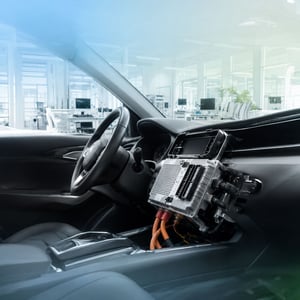
A CLEAR PATH FROM
REQUIREMENT TO TEST REPORT
1. Requirement review
Send us the applicable standard or OEM specification, revision level, customer requirements, and available component documentation.
2. Device and installation review
We review the component’s dimensions, mass, mounting interface, intended vehicle location, electrical supply, loads, communication interfaces, operating modes, and functional limits.
3. Test matrix development
Each applicable requirement is mapped to its test method, sample group, operating condition, monitoring requirement, exposure sequence, and acceptance criterion.
4. Fixture and instrumentation planning
For shaker tests, the plan defines the mounting method, component orientation, fixture requirements, cable routing, accelerometer locations, control strategy, and functional instrumentation.
5. Test execution and anomaly management
Baseline checks are completed before exposure. Any interruption, deviation, visible damage, or unexpected behavior is documented and communicated according to the agreed hold points.
6. Reporting and next steps
The final report connects test conditions with measured data, observations, deviations, photographs, and pass/fail results. Where appropriate, the findings can be used to define corrective actions, failure analysis, or confirmation testing.


BIG GOALS.
STRONG PARTNERS.
WITH US, VISION BECOMES REALITY.
The silent force behind safe mobility
At imat, we don't just test - we protect, strengthen and ensure the quality of your components.
With state-of-the-art testing technology, international accreditation and in-depth expertise, we are the
the invisible force behind reliable performance.
TRUSTED BY AUTOMOTIVE LEADING INDUSTRY
Blank text accreditations/certifications/test standards. Automobile manufacturers worldwide such as Volkswagen, Mercedes-Benz, BMW, Porsche, Tesla & Co. as well as suppliers trust in our expertise and reliability.





REQUEST AN AUTOMOTIVE ELECTRICAL COMPONENT TEST PLAN
Send us your applicable standard, component information, and target schedule. Our engineering team will review the requirements and define the proposed test scope.
For a faster technical review, include:
- Standard or OEM specification and revision
- Product description and application
- Vehicle mounting location
- Component dimensions and mass
- Mounting drawing or CAD data
- Supply voltage and maximum current
- Electrical loads and operating modes
- CAN, LIN, Ethernet, or discrete interfaces
- Required functional monitoring
- Number of available samples
- Target test date and reporting deadline
READY TO LOOK TO THE FUTURE?
Artificial exposure is more than just a laboratory test.
It is a controlled look into the future of your vehicles and components long before they hit the road. With our "superpower" of time acceleration, we help you make better decisions and develop long-lasting quality.
Talk to us about customized exposure and aging tests for your needs.

NORM CONFORM. CLEAR. RELIABLE.
TESTS ACCORDING TO GLOBAL STANDARDS.
Our validation follows the standards that stand for safety, quality and reliability worldwide.
DIN, ISO, VDA and OEM specifications determine our testing processes - transparently documented and consistently compliant with standards.
Because the highest standards are the basis for lasting results.






BIG GOALS.
STRONG PARTNERS.
FULL SPEED AHEAD TO THE OVERALL PORTFOLIO.
The silent force behind safe mobility
At imat, we don't just test - we protect, strengthen and ensure the quality of your components.
With state-of-the-art testing technology, international accreditation and in-depth expertise,
we are the invisible force behind reliable performance.
TESTED QUALITY - YOUR ADVANTAGE THROUGH TRUST:
- Safety - reliable materials and systems
- Compliance - fulfillment of standards, laws & OEM specifications
- Competitiveness - quality, durability and comfort as selling points
Our promise to you
We support companies along the supply chain in making materials, components and vehicles safe, sustainable and ready for series production for the mobility of the future. To this end, we offer independent testing and expert advice - backed by over 35 years of experience and a deep understanding of our customers' challenges. With a global presence, we support projects in all relevant markets, combine international standards with regional requirements and thus create real added value locally. imat services combine maximum reliability, efficient processes and market-driven prices with technical excellence.
Together, we create trust in innovative mobility solutions and make a measurable contribution to economic efficiency and ecological responsibility.
BIG GOALS.
STRONG PARTNERS.
FULL THROTTLE TO THE COMPLETE PORTFOLIO.
The silent force behind safe mobility
At imat, we don't just test - we protect, strengthen and ensure the quality of your components. With state-of-the-art testing technology, international accreditation and in-depth expertise, we are the invisible force behind reliable performance.